Smart Lock Protocols
Security should never be compromised for the sake of convenience. Upgrading a mechanical deadbolt to a digital locking mechanism introduces vast functionality—remote auditing, temporary guest access, automated locking on departure—but requires an ironclad communication protocol to prevent vulnerabilities.
Moving Beyond Bluetooth
Early smart locks relied heavily on Bluetooth Low Energy (BLE). While energy-efficient, Bluetooth is inherently limited by its range. Homeowners frequently faced scenarios where the lock failed to register their smartphone until they were physically pressing against the door. This defeated the purpose of a seamless, automated entry experience.
"A smart lock that forces you to wait on your porch is inherently dumber than a mechanical key."
The Rise of Thread & Zigbee
For robust property security, your access points must communicate over mesh networking protocols. Zigbee and Z-Wave were the industry standards for years, offering excellent range by allowing devices to pass signals to one another. However, the modern standard moving forward is Thread.
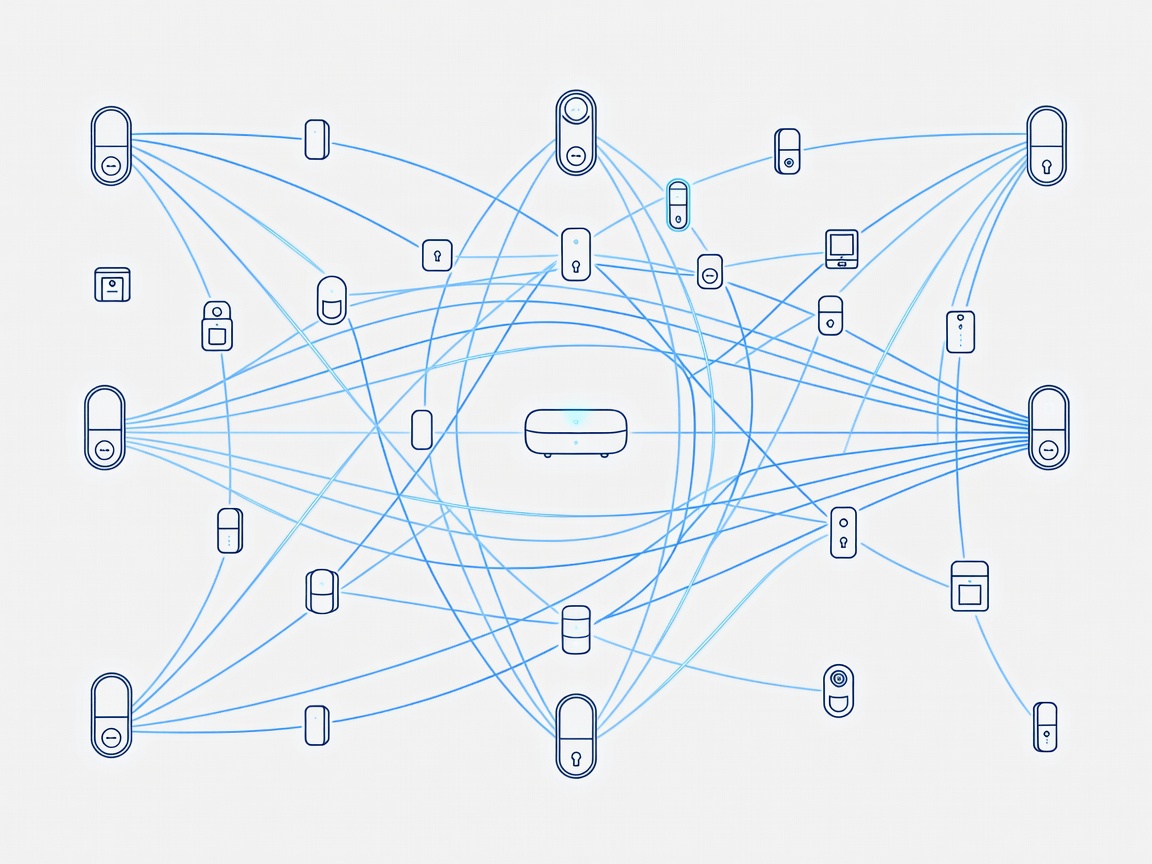
Thread is an IPv6-based, low-power mesh networking technology. Unlike standard Wi-Fi, which drains battery life rapidly, Thread allows battery-operated locks to function for over a year while maintaining an always-on connection to the broader network. There is no single point of failure; if one routing node goes offline, the Thread network instantaneously heals itself and routes data through another path.
Auditable Access
The true power of an automated security perimeter lies in its auditability. A proper setup removes the anxiety of lost physical keys. Through secure integration, homeowners can issue time-bound cryptographic keys. For instance, a cleaner’s access code is only valid on Tuesdays between 10:00 AM and 2:00 PM. Upon entry, the central hub records the event and simultaneously disarms the interior motion sensors, proving that automation and security can act in unison.