Choosing a Voice Assistant
The era of managing smart devices through disparate smartphone apps is over. True automation requires a centralized brain. The hub you select dictates the communication protocols your home can support, the speed of your device reactions, and the ultimate privacy of your domestic life.
"Your home's operating system should be felt, not seen."
The Case for Local Processing
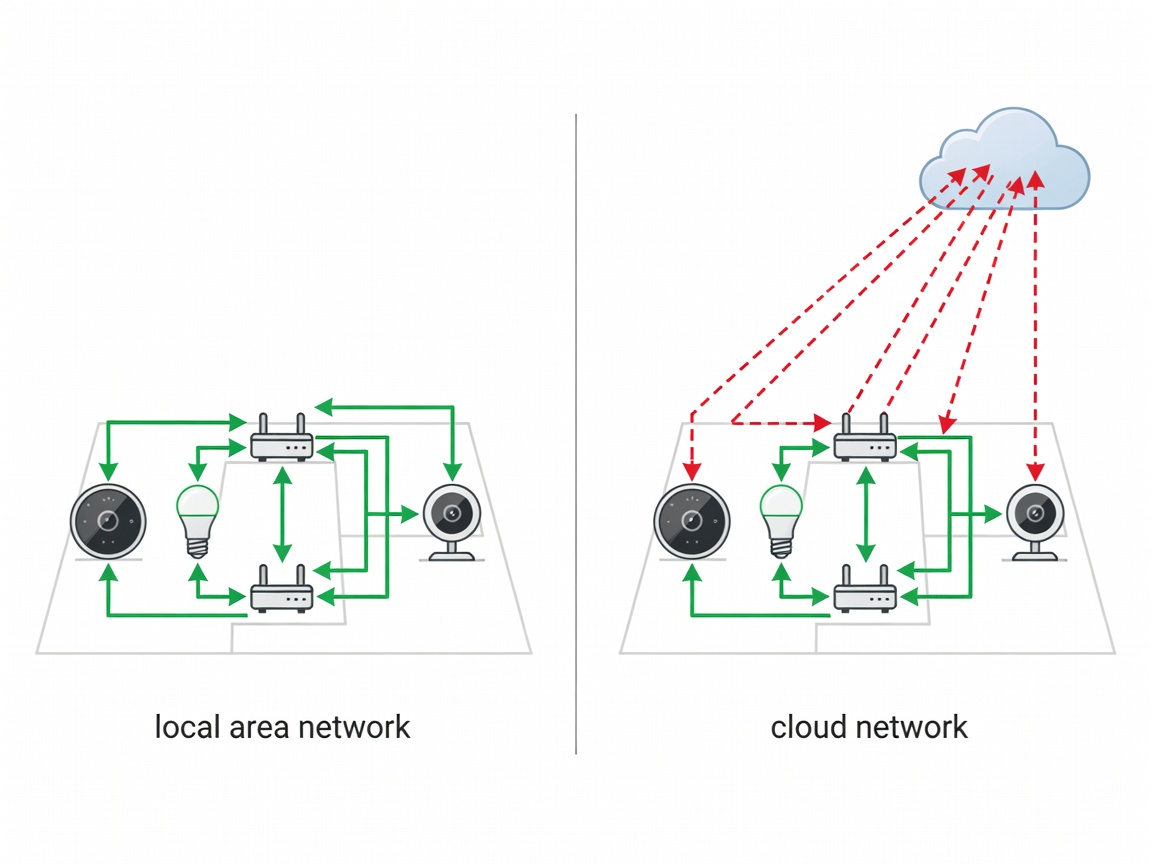
A significant flaw in early smart home infrastructure was the reliance on cloud processing. When a user issued a command to turn on a light, the request was routed to external servers hundreds of miles away before returning to the device. This created intolerable latency and rendered systems useless during internet outages.
Modern hubs like Hubitat and Home Assistant process commands locally. By prioritizing localized execution, commands are executed in milliseconds. This fundamental architectural shift guarantees that your living space remains functional regardless of your ISP’s uptime.
Voice Assistants: The Interface, Not the Engine
It is critical to separate the voice assistant interface (e.g., Alexa, Google Assistant, Siri) from the automation engine. While voice interfaces are excellent for ad-hoc requests ("Set a timer for 10 minutes"), they make poor automation hubs. Their logic engines are simplistic and highly dependent on cloud connectivity.
Pragmatic homeowners integrate their preferred voice assistant merely as a peripheral node to their primary, locally hosted hub. This ensures complex logic—such as evaluating ambient light, time of day, and occupancy before triggering a scene—remains securely on-premises.
| Hub Type | Processing Location | Protocol Support | Latency |
|---|---|---|---|
| Cloud-reliant (Echo, Nest) | Remote Servers | Wi-Fi, Bluetooth, Matter | High (500ms+) |
| Local Engine (Hubitat) | On-Premise | Zigbee, Z-Wave, Matter | Minimal (<50ms) |
| Open Source (Home Assistant) | On-Premise | Universal | Minimal (<50ms) |