Automated Thermostats
Heating and cooling account for nearly half of the energy consumption in a standard household. Managing this expenditure manually through rudimentary, schedule-based thermostats is incredibly inefficient. Genuine energy efficiency in the modern era requires predictive modeling and real-time environmental data.
The Flaw of Centralized Readings
Legacy thermostats read the temperature exclusively in the hallway where they are mounted. This architecture ignores the thermal variations across a property—a south-facing living room may be sweltering in the afternoon sun, while a north-facing bedroom remains freezing. The central unit remains entirely ignorant of these extremes.
"Automation corrects the architectural blind spots of standard HVAC design."
Distributed Sensor Networks
Advanced automated thermostats like the Ecobee or intelligent setups routed through Home Assistant utilize distributed sensor networks. Small, battery-operated sensors are placed in highly trafficked rooms. These nodes report both temperature and occupancy data back to the central logic engine.
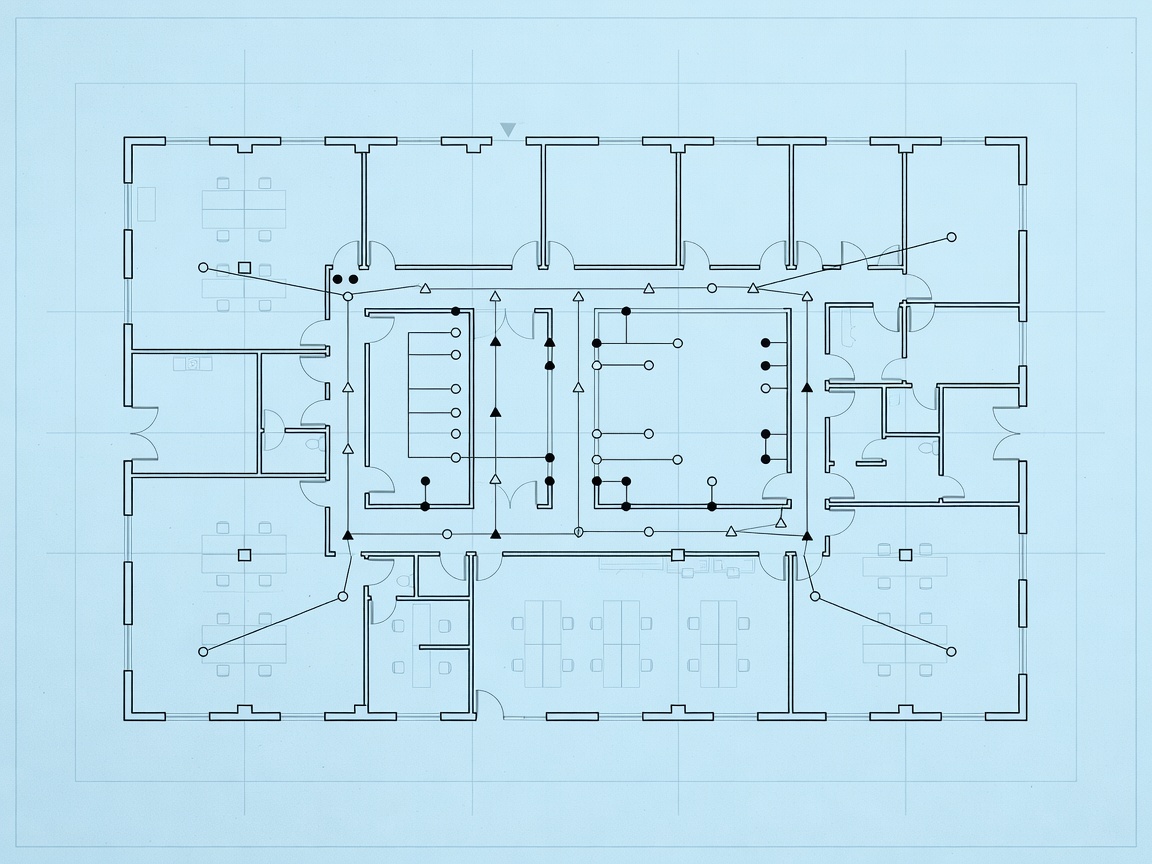
If the logic engine detects that the primary bedroom is occupied but the living room is empty, it will optimize the HVAC output to satisfy the bedroom's parameters, ignoring the ambient temperature of the vacant spaces. When paired with automated smart blinds—which close to reject solar heat gain during peak summer hours—the energy savings scale exponentially.
Geofencing & Predictive Heating
Schedules are rigid. Lives are not. Smart thermostats utilize geofencing, tracking the GPS location of the occupants' smartphones. When the system detects the final occupant has left a predetermined radius of the property, it automatically shifts into a broad 'Eco' mode, relaxing the temperature bounds. When an occupant breaches the radius returning home, the system preemptively initiates the HVAC to ensure the environment is optimal the moment the door opens.